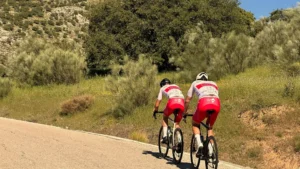
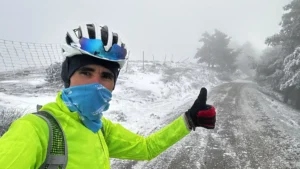
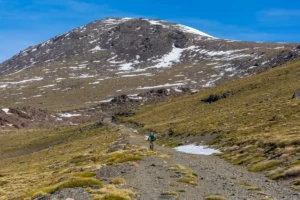
Málaga is internationally known for its coastline and climate, but what many cyclists don’t realize is that it is one of the most mountainous provinces in Spain, with an exceptional concentration of mountain ranges, quiet secondary roads, and mountain passes ideal for high-level cycling.
Various publications and analyses of Spain’s relief place Málaga among the provinces with the strongest mountainous character in the country, and some studies even consider it the second most mountainous province in Spain—a fact that surprises those who associate the area only with sun and beaches.
A Territory Chosen by Professional Cyclists
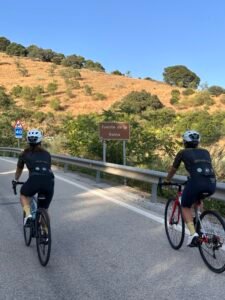
The quality of Málaga’s terrain has not gone unnoticed in the professional peloton. In recent weeks, Jonas Vingegaard has been training in the province of Málaga, completing demanding rides directly from the city and accumulating large amounts of elevation on climbs such as Fuente de la Reina, a long and steady ascent commonly used for endurance and tempo training.
In addition, Victor Campenaerts used the roads of the Axarquía region as part of his preparation for the Tour de France two years ago, taking advantage of the combination of elevation gain, quiet roads, and stable climate offered by this inland area of Málaga.
These choices are no coincidence: Málaga allows cyclists to train as if they were at altitude, without long transfers, riding directly from the city or from small rural villages.
Accessible and Demanding Mountain Passes (Up to 1,000 m by Road)
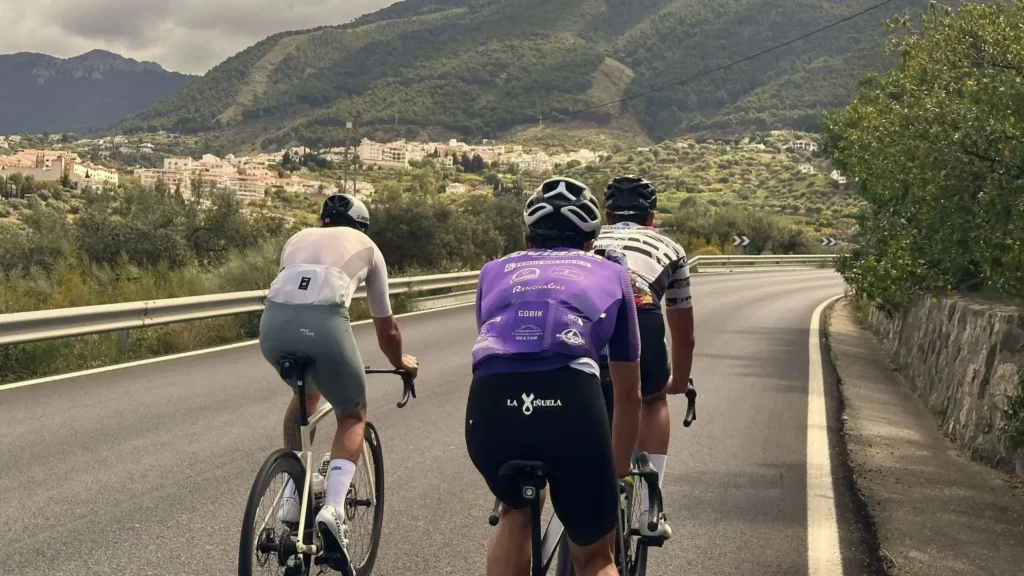
Although the province has peaks exceeding 2,000 meters—such as La Maroma, mainly used for hiking—road cycling in Málaga stands out for the large number of fully paved mountain passes reaching or exceeding 1,000 meters in altitude, many of which can be linked together in a single ride.
Some of the most representative climbs include:
- Puerto del Sol – A classic climb of the Axarquía, considered one of the most beautiful passes in the region.
- Fuente de la Reina – A long, steady ascent, perfect for endurance training starting directly from Málaga city.
- Peñas Blancas – One of the most demanding climbs in southern Spain, frequently featured in La Vuelta, with very hard sections.
- El Torcal de Antequera – A spectacular climb, both for its elevation gain and its unique landscape.
Combined, these ascents allow cyclists to design routes with significant accumulated elevation, comparable to high-mountain training sessions.
Numbers That Explain Málaga’s Cycling Potential
Cyclists love numbers, and Málaga delivers some that are unusual for a coastal province:
- Road climbs reaching 1,000–1,200 meters of altitude
- The possibility of riding from sea level straight into the mountains in a single loop
- A high density of mountain ranges: Montes de Málaga, Axarquía, Serranía de Ronda, Sierra de las Nieves
- High accumulated elevation even on medium-distance rides
- Quiet, low-traffic secondary roads
All of this makes Málaga an ideal environment for endurance training, Grand Tour preparation, and mountain-specific workouts.
Málaga, a World-Class Cycling Destination
Beyond traditional tourism, Málaga has established itself as one of the most complete and mountainous cycling destinations in Spain, offering demanding training, stunning landscapes, and excellent logistics for cyclists traveling from abroad.
And why not say it: in Málaga it is absolutely possible to link three first-category climbs in a single ride—Fuente de la Reina, Puerto del Sol (Alfarnate), and El Torcal de Antequera—riding on very quiet roads with constant elevation gain and almost no traffic. The result is a true sufferfest: 158 kilometers and over 3,000 meters of elevation gain, starting and finishing in Málaga city… with still enough time to sit down and enjoy a well-earned lunch. Because here, high-level cycling also comes with quality of life 😉.
🚴♂️ Want to Ride These Spectacular Roads?
Don’t travel with a bike bag.
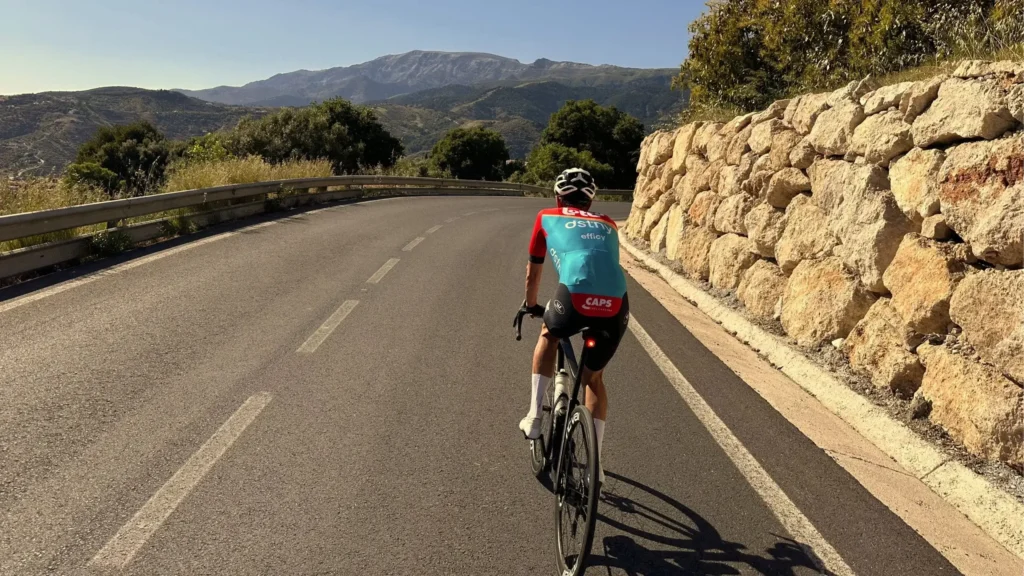
Book your high-end road bike at MalagaRentabike.com and enjoy legendary climbs like Puerto del León, Peñas Blancas, or Fuente de la Reina with equipment that matches the terrain.